

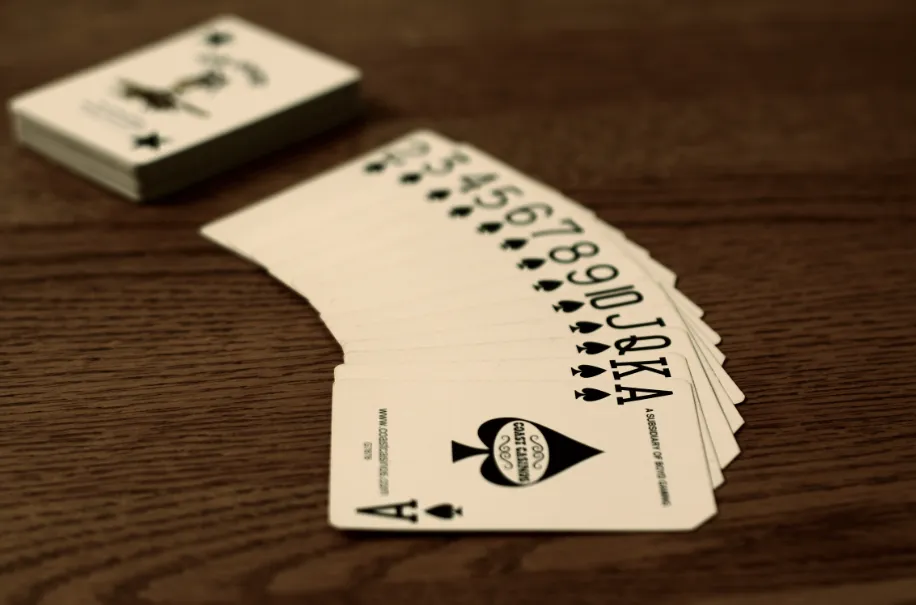
In the fast-paced world of modern gaming, where success is often measured by frames per second or rapid-fire reflexes, the spades card game stands as a sophisticated outlier. It is a pastime that rewards the patient, the observant, and the calculated. While other trick-taking games might allow for a degree of “autopilot” play, Spades demands constant vigilance and a deep understanding of probability. It is a game where the most aggressive player is rarely the winner, and where the ability to read an opponent’s intent is worth more than a handful of high cards.
Since its rise to popularity in the mid-20th century, Spades has differentiated itself through its unique scoring system and the introduction of bidding. Unlike Bridge, which can feel overly academic, or Hearts, which is often chaotic, Spades strikes a perfect balance between accessibility and depth. It is a quintessentially social game, yet it possesses a mathematical rigor that can challenge even the most seasoned logic enthusiasts.
The Core Philosophy: Accuracy Over Dominance
The fundamental brilliance of the spades card game lies in its bidding process. At the start of every hand, players must look at their thirteen cards and predict exactly how many tricks they will win. This single mechanic changes the entire objective of the game. You are no longer trying to win as much as possible; you are trying to be right.
In most card games, a “good” hand is one filled with Aces and Kings. In Spades, a “good” hand is simply one that you can accurately value. If you bid three tricks and take exactly three, you are successful. If you take four, you are penalized with “bags.” These are over-tricks that eventually lead to a massive point deduction. This creates a fascinating paradox where winning a trick can actually be a losing move. It forces players to play with restraint, sometimes intentionally losing a round to stay within their predicted quota.
This “accuracy-first” model mimics real-world strategic planning. In business or engineering, over-delivering can sometimes be as disruptive as under-delivering if it leads to resource depletion. Spades codifies this logic into a 52-card deck, making it a favorite for those who enjoy the nuances of resource management.
The Master Suit: The Power of the Spade
As the name suggests, the Spade suit is the permanent trump. Regardless of which suit is led, a Spade will beat any card of that lead suit. This hierarchy introduces a layer of tactical protection. In the spades card game, the Spades in your hand act as your currency. You can use them to “cut” a high Diamond or Heart played by an opponent, effectively stealing a trick you weren’t supposed to win.
However, because Spades are so powerful, they are also your greatest liability in a “Nil” bid. Bidding Nil predicting you will win zero tricks is the ultimate high-risk, high-reward maneuver. It offers a massive point bonus if successful, but it leaves you vulnerable. If you are forced to play even a low Spade and it happens to be the highest card in that specific round, your Nil is “broken.” This results in your team suffering a heavy penalty. This tension between using Spades as shields or avoiding them as traps is what gives the game its enduring strategic appeal.
The management of the Spade suit is often what separates the amateur from the professional. A novice sees a Spade and thinks of it as a weapon. A master sees a Spade as a commitment. Every time you play a Spade, you are reducing your future ability to control the board. Therefore, the decision of when to “break Spades” (playing the first Spade of the game) is often the most debated move in any given match.
Partner Dynamics and Non-Verbal Communication
When played in its standard four-player format, the spades card game is a partnership endeavor. You and your teammate sit across from each other, and your combined bids form a single goal for the round. This adds a psychological dimension that solo games lack. Since you cannot see your partner’s cards or speak to them about strategy during play, you must communicate through the cards you lay down.
1. The Opening Lead
The card you choose to lead with sends a signal. Leading a low card in a “short” suit (one where you have few cards) suggests to your partner that you are trying to run out of that suit quickly. This allows you to start trumping with Spades earlier in the game. Conversely, leading a “boss card” like an Ace of Diamonds shows you are taking immediate control to secure your bid early.
2. Following Suit and Signaling Strength
How your partner follows suit can tell you everything about their hand strength. If they play a high card early, they may be trying to take the lead to protect a specific bid or to lead a suit they are more comfortable with. If they play unusually low, they might be struggling to avoid bags or protecting a fragile Nil bid. Every card played is a data point in an invisible conversation.
3. Covering the Nil
One of the most intense experiences in the spades card game is protecting a partner who has bid Nil. In this scenario, your goal shifts entirely. You must play the highest card possible in every round to “cover” your partner, ensuring they aren’t forced to take a trick. This often requires you to sacrifice your own high cards, playing a King to beat an opponent’s Queen just so your partner’s 4 doesn’t win the pile. This selfless style of play is the ultimate test of partnership.
Counting the Deck: The Strategist’s Edge
To move from a casual player to a master of the spades card game, one must develop the habit of card counting. Because there are only 52 cards and they are distributed evenly, a keen observer can track which “boss cards” (Aces and Kings) have been played and how many Spades remain in the wild.
If you know that the Ace and King of Hearts have already been played, the Queen of Hearts becomes the new boss. If you also know that your opponents are “void” in Hearts (they have run out and are now trumping with Spades), you know that playing that Queen is a guaranteed way to draw out a Spade from their hand.
This level of deduction turns the game into a live puzzle. You aren’t just reacting to the current turn; you are mapping the remaining possibilities of the entire deck. Professional players often know the exact composition of the remaining cards by the tenth trick. This foresight allows them to force opponents into “impossible” plays where they must either take an unwanted bag or break their own partner’s Nil bid.
The “Bag” Trap: Managing Over-Tricks
Most beginners in the spades card game make the mistake of playing too aggressively. They see a chance to take a trick and they take it. However, the accumulation of “sandbags” is the silent killer of many promising leads. Usually, when a team accumulates ten bags, they lose 100 points.
Strategic enthusiasts use bags as a weapon. If you see that your opponents are close to “bagging out,” you can intentionally play low, forcing them to take tricks they didn’t bid for. This “force-feeding” strategy is a hallmark of advanced play. It requires a calm temperament and the ability to look three or four hands ahead. Sometimes, losing the current round is the only way to ensure the opponents hit that 10-bag penalty.
This mechanic prevents the game from becoming a simple “big cards win” scenario. Even if you are dealt a “weak” hand with no Aces or Kings, you can still win by being the master of the low cards, cleverly maneuvering your opponents into taking too many tricks.
The Psychology of the Bid: Bidding 13
In a standard game, there are 13 tricks available. A fascinating psychological element arises when the total of all four players’ bids equals exactly 13. This is known as a “tight” board. In this scenario, there are no extra tricks (bags) to be had. Every trick someone takes over their bid must come directly from someone else’s bid.
Tight boards turn the spades card game into a zero-sum war. The atmosphere changes from “avoiding mistakes” to “defending territory.” If you bid four and your opponent bids four, but there are only 13 tricks available, the pressure to secure your four tricks early is immense. This is often where the most dramatic “trump wars” occur, as players use their Spades aggressively to ensure they aren’t the one who finishes “set” (falling short of their bid).
On the other hand, if the total bids equal only 10 or 11, there are “loose” tricks on the table. In these games, the strategy shifts toward “bag management.” You want to secure your bid as quietly as possible and then duck out of the way, leaving the remaining tricks for your opponents to choke on.
The Social and Cultural Legacy of Spades
Beyond the mechanics, the spades card game holds a unique place in social history. It is famously a staple of military life and university dormitories. Its popularity in these settings is no accident. Spades is a game that builds bonds. The shared victory of a successful Nil bid or the shared frustration of a “set” creates a communal experience that few other games can match.
It is also a game of “table talk” and bravado. While the rules strictly forbid communicating about your hand, the “vibe” of the table the speed with which someone plays a card, the sigh after a trick is taken adds a layer of human drama. In the digital space, this is often replicated through emotes or chat, but nothing quite beats the tension of a live, four-person game where you can see the sweat on your opponent’s brow as they decide whether to play their last Spade.
Navigating the Digital Transition
While many classic games have struggled to find their footing online, the spades card game has flourished. Its turn-based nature makes it perfect for mobile play, and its depth ensures that no two matches are ever the same. Digital platforms have also introduced variations that keep the game fresh:
- Mirror: You must bid the exact number of Spades you have in your hand. This removes the “choice” from bidding but adds a massive layer of strategy to the play.
- Suicide: One partner must bid Nil, while the other must bid at least four. This creates a high-stakes dynamic from the very first card.
- Whiz: You must bid the number of Spades you have, or bid Nil. This variant speeds up the game significantly while keeping the strategic core intact.
These digital variations allow players to practice specific skills, such as protecting a Nil or managing a high-Spade hand, in a more focused environment.
Conclusion: A Test of Mental Fortitude
The spades card game is far more than a way to pass the time; it is a discipline. It teaches us about the value of accuracy over ego and the importance of supporting a partner toward a shared goal. Whether you are playing at a kitchen table or on a high-stakes digital leaderboard, the thrill of a perfectly executed bid is unmatched.
It is a game where the underdog can win through superior observation, and where the strongest hand can be dismantled by a clever series of low-card leads. The game reminds us that in strategy, as in life, it isn’t always about having the best cards it’s about how you play the ones you’ve been dealt. If you are looking for a game that prizes the mind over the muscle, look no further than the Queen of Spades and her court.

