

Last updated on July 20th, 2025 at 04:15 am
According to Xoilac TV https://xoilacyzzz.tv/ Football, the king of sports, has now become an indispensable part of the cultural and spiritual life of the Vietnamese people. From small grassroots pitches to grand stadiums, from school matches to international tournaments, the love for football in Vietnam has grown strongly and persistently for over 100 years.
When Was Football Introduced to Vietnam?
Football began its journey into Vietnam around the late 19th century, specifically between 1896 and 1905, during the French colonial rule. The French brought football to Vietnam, initially to serve the recreational needs of French soldiers, officials, and merchants. The first matches appeared in Saigon, Hanoi, and Hai Phong—the major centers at the time.
In 1906, the Olympique Hai Phong Club—the first-ever Vietnamese football club—was founded, marking a turning point from a foreign sport to a cultural activity embraced by the Vietnamese people. Since then, local football tournaments have continuously emerged. Football gradually spread to all provinces and cities, forming passionate fan communities.
The Development of Football Throughout Vietnam’s History
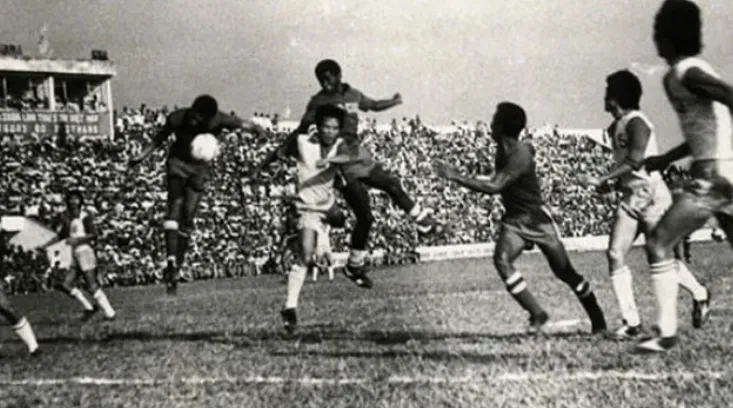
From the amateur matches of the early 20th century, Vietnamese football has gone through many historical upheavals. After the country gained independence, the football movement was maintained and developed alongside the nation-building process. National leagues were established, and the Vietnamese national team began to participate in regional competitions.
Entering the 21st century, Vietnamese football made remarkable strides. One of the most memorable milestones was the AFF Cup 2008 championship, when the Vietnamese team stood at the pinnacle of Southeast Asian football for the first time. This achievement ignited an intense passion for the sport across the country.
Especially from 2018 onwards, under the guidance of coach Park Hang-seo, Vietnamese football entered a golden era. The U23 Vietnam team achieved a miracle by reaching the final of the 2018 AFC U-23 Championship in Changzhou (China), ushering in a new era for the country’s football. Subsequently, the national team went on to win the AFF Cup 2018, reach the quarterfinals of the Asian Cup 2019, and advance deep into the third qualifying round of the 2022 World Cup.
Beyond the national team’s success, domestic leagues like the V.League have also become more professional, attracting investment from major corporations and gaining widespread public attention. Top clubs like Hanoi FC, Viettel, Cong An Hanoi, and Hoang Anh Gia Lai have continuously produced talented players who contribute to the national team.
Vietnamese Football Today – A Source of National Pride
Today, Vietnamese football is not only a popular sport but has become a source of national pride. Every match played by the Vietnamese national team attracts the passionate support of millions of fans across the country. The sight of thousands of fans painting the streets red with the national flag, drums, and cheers every time the team wins has become a beautiful symbol of the Vietnamese people’s spirit of unity.
Furthermore, the development of Vietnamese women’s football is a notable bright spot. The Vietnamese women’s football team has won multiple SEA Games gold medals and, notably, secured a ticket to the 2023 Women’s World Cup, marking the first time Vietnamese football has participated in a major official World Cup.
In addition, the community football movement, particularly grassroots football (“phủi” football), is also flourishing, especially in major cities. This shows that the love for football is not confined to stadiums or television screens but has woven its way into the daily lives of the Vietnamese people.
See more: https://xoilacyzzz.tv/bang-xep-hang-bong-da/
Vision and Future
With a solid foundation built over more than a century, Vietnamese football is now aiming for higher goals, such as qualifying for the men’s World Cup, developing a professional youth training system, elevating the national league, and making a mark in continental arenas. Modern football academies like HAGL JMG, PVF, and Viettel are training excellent generations of players, promising to bring even more glory in the future.
Conclusion
Football was introduced to Vietnam in the late 19th century, starting with matches played by French soldiers, and gradually became a great passion for the Vietnamese people. After more than 100 years of development, Vietnamese football is no longer just a sport but a spiritual symbol and a shared pride of the entire nation. From those small matches of yesteryear, Vietnamese football is now boldly reaching out to the world, carrying the aspirations, courage, and love of millions of Vietnamese hearts.

