

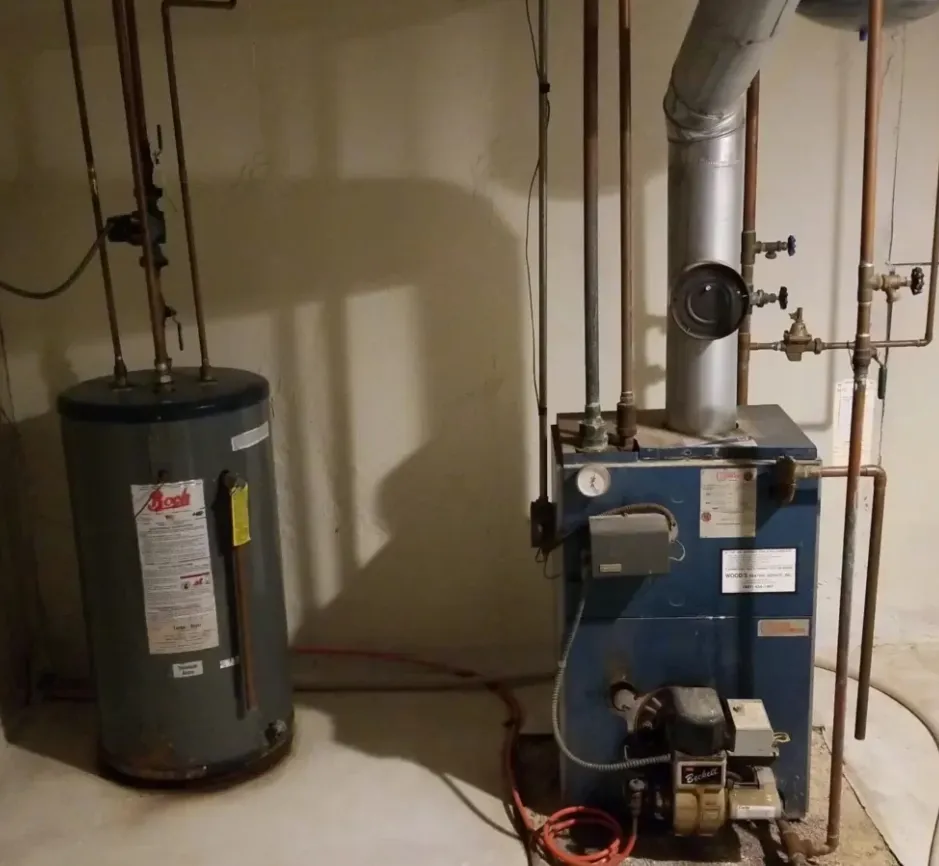
The first oil delivery of the season reached a 1960s colonial off Route 105 in November, and the ticket read $612 for 190 gallons. By March the owner, one year into her first house, had signed for four more. Nothing in the house was broken. The boiler ran, the radiators clanked, and the two upstairs bedrooms still sat colder than the kitchen every morning.
Winters like that are what send new owners to price out heat pump installation middleborough ma instead of booking another autumn fill-up. The case for switching is mostly arithmetic. Electric heat runs on a rate you can look up, while oil runs on a delivered price that resets between one fill and the next.
Oil Bills Swing With Every Winter
Oil is priced by the gallon, and that price is out of your hands. A 275 gallon tank filled four times across a New England season turns a 40 cent swing into about $440. The case we see most often is a sixties colonial with one heating zone upstairs and a boiler sized for a draftier house. It short-cycles, burns fuel warming its own iron, and never gets the far bedrooms even.
Projected 2025-26 winter (Nov-Mar) home heating cost by fuel, U.S. average. Example figures for weighing an oil boiler against electric heat. Source: U.S. EIA Winter Fuels Outlook (October 2025).
| Heating fuel | Avg. winter (Nov-Mar) cost | Change vs last winter |
| Heating oil | $1,390 | -8% |
| Electricity | $1,133 | +4% |
| Natural gas | $642 | -1% |
Electric Heat Runs On Steadier Numbers
Buying oil is like buying airline seats at whatever this week’s fare happens to be. Electricity behaves more like a transit pass, where the rate does change, but on a published schedule you can see coming. Predictability is the quiet half of the case, and it is why heat pump installation middleborough ma shows up in so many first-winter budget conversations. A heat pump moves heat rather than burning something to make it, so a unit of electricity delivers more than a unit of heat.
Radiators warm a room and filter nothing. A heat pump’s air handler pulls room air across a filter several times an hour. That is a side benefit, not a health claim. A national survey in the Journal of Allergy and Clinical Immunology found dog allergen in 100 percent of US homes and cat allergen in 99.9 percent, even where no pet lived.
The Install Cost Broken Down Line By Line
Say a three head ductless system for a 1,700 square foot colonial runs $14,500 installed. Roughly $9,000 of that is equipment, $4,200 is labor across a two day install, and the rest covers line sets, electrical work, and the permit. Add a panel upgrade if the house still has 100 amp service, which at this scale usually means another $2,000. The upfront number lands once, while the fuel number comes back every winter you own the house.
That is the whole comparison in one line.
Plenty of installs keep the oil boiler as backup, which makes a working carbon monoxide alarm non-negotiable. EPA indoor air guidance puts an alarm on every level of the home and outside each sleeping area. If one sounds, get everyone outside first, then call 911 from there.
Where Massachusetts Rebate Money Comes From
Heat pump rebates in Massachusetts are funded through utility efficiency programs rather than a check from the state treasury. Amounts and rules get revised, so confirm current terms with your installer and utility before budgeting a number. Honestly, I cannot tell you what share of homeowners around here claim the full rebate they qualify for. Nobody publishes that drop-off rate, and the paperwork gets abandoned more often than anyone likes to admit.
The Payback Window Is Shorter Than It Looks
Run the season numbers and the gap does most of the work. If oil costs $1,390 a winter and electric heat costs $1,133, the yearly saving is $257, which on its own is a slow payback. Rebates take a chunk out of the upfront, the old boiler stops needing its $250 service call every fall, and resale gets a nudge. Solar Power World reported in June 2026 that across more than 500,000 sales, homes with heat pumps sold for up to 1 percent more, about $3,900 on a $399,000 median. That premium showed up when the listing actually named the heat pump.
Get two quotes, ask each installer for a season cost estimate at your actual usage, and set that against last year’s oil receipts. The receipts are the honest part of this exercise. A house that burned 900 gallons last winter has a very different answer than one that burned 500.

