

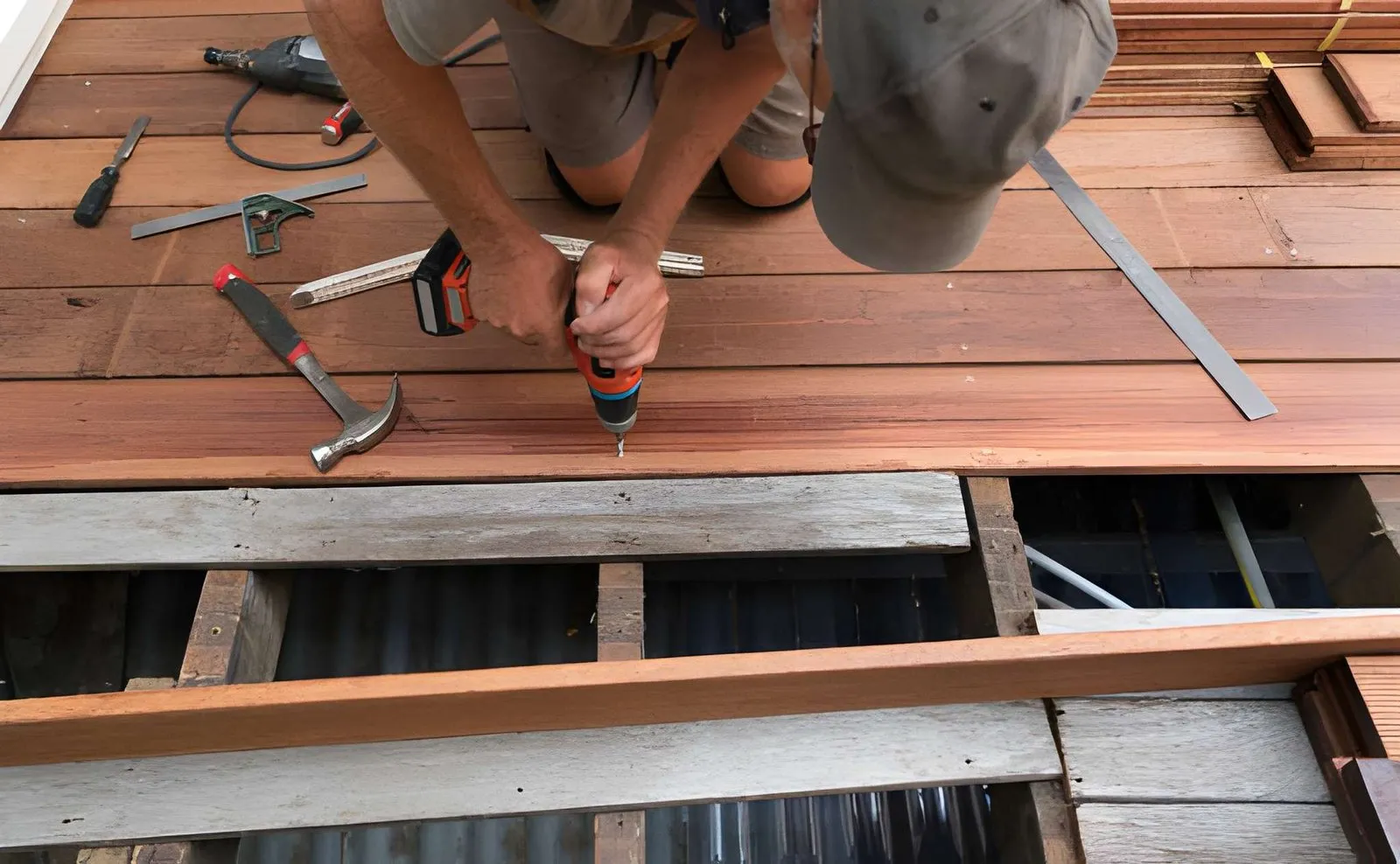
A full rebuild on a 12×16 second-story deck in the south metro runs somewhere between $6,000 and $9,000, and that number lands hard on a first-time owner who was budgeting for a gallon of stain. Sanding and refinishing the same deck costs a couple hundred dollars and one Saturday. So the cheap fix gets done twice, sometimes three times, before anybody prices the real one. Here is the blunt version. When a deck bounces, sways, or pops nails out every spring, the boards were never the failure, and the frame, the ledger, and the footings are the actual job, which is why the deck builders Lakeville MN homeowners call for a repair estimate so often come back with a rebuild number instead.
Stain Hides Rot It Cannot Stop
Stain is a coating. It slows water down on the face of a board and does nothing at all for end grain, joist tops, or a post base sitting in wet soil. Job after job, the deck that gets torn out looks perfectly respectable from the yard and comes apart at the connections, because that is where water sat for fifteen years with nowhere to drain. Push a screwdriver into a joist where it meets the house. If the tip sinks in like it is going into a wet paper towel, you are not looking at a finish problem, and no product sold in a five gallon pail is going to change that.
Two coats of stain over soft wood is a paint job on a structural problem. It looks solved for about eleven months.
Bounce And Sway Point To Framing Not Boards
Bounce is a joist problem. Sway, that side-to-side shuffle you feel when three people cross the deck at once, is usually a bracing or footing problem, and swapping the decking touches neither one. On a 1990s starter home the crew typically finds 2×8 joists at 24 inches on center carrying a span nobody sized them for, along with footings poured shallow enough that frost has been nudging them upward a little every winter. Footings in this part of Minnesota have to sit below the frost line, which building officials around the metro generally treat as 42 inches or deeper, and a post that rides up and down with the seasons will keep loosening every connection above it.
Half the calls that come in during April are really about the railing, because somebody read something online about height rules and got worried. Set that aside for a minute. The railing is bolted to the same frame that is moving, so the frame is the conversation. When new posts and new footings go in, the free locate from Gopher State One Call at 811 comes first, before any hole gets dug, and it takes one phone call or a few minutes on their online portal.
Ledger Bolts Are The Part Nobody Inspects
The ledger is the board bolted to the house that holds one entire side of the deck up. Nobody sees it, nobody checks it, and it is where the real danger lives. In a July 2026 report on residential deck weaknesses, Always Home Repair puts over 90% of sudden deck collapses down to compromised ledger boards detaching from the home, and names bouncing or sagging underfoot as one of the clearest indicators of structural failure. What tear-offs from that era usually turn up is nails where lag bolts or structural screws belong, plus no flashing above the ledger, so two decades of roof runoff ran straight down behind it into the rim joist. A deck tells on itself for years before it lets go.
If your deck is separating from the house, sagging, or moving under your feet, keep everyone off it and do not use it again until a qualified builder has inspected it. That is not caution for its own sake. OSHA’s walking surface standard, 29 CFR 1910.22(d)(2), tells employers to guard a hazardous walking surface so no employee can get onto it until the condition is corrected, and while that rule governs workplaces rather than backyards, the reasoning carries over to a second-story deck hanging above a concrete patio. Ledger and footing work is permit and inspection work in every south metro city I have pulled a permit in, never a weekend patch with a box of screws.
Questions Homeowners Keep Asking About Deck Rebuilds
Can I just replace the decking and keep the frame?
Sometimes, and any builder worth hiring should check that for you before quoting anything. Where the joists, beam, posts, and ledger are sound and correctly sized, new decking over the existing frame is a legitimate option that saves real money. The two parts that decide it are the ledger and the footings, because those are what you cannot upgrade later without pulling the whole deck apart a second time.
What does a rebuild actually cost?
For a 12×16 second-story deck in the south metro, a straightforward cedar rebuild with new footings, framing, stairs, and railing tends to land in that $6,000 to $9,000 range, with composite decking pushing the top end higher. Treat those as example figures rather than a quote, since site access, stair count, and how bad the rim joist looks once the siding comes off all move the number. Ask for two or three written estimates that price framing separately from decking, because that split is where the honest differences between bids show up.
How long will my yard be a construction zone?
Build time on a deck this size is a few days once the material is on site. The calendar runs longer than the crew does, though, because permit review and the footing inspection sit between demolition and framing, and the city schedules those, not your contractor. Two to three weeks from signed estimate to finished deck is a fair expectation in a normal spring, and longer in May, when every crew in the metro is already booked out.
Rebuild Once Instead Of Patching Every Spring
Six years of stain, fasteners, and one replacement board a season runs maybe $500 a year, and at the end of it you own a deck that is six years further gone. The math is not complicated. A tired finish deserves a refinish and a free Saturday; a structure that moves deserves new footings, a properly bolted and flashed ledger, and framing sized for the span it is carrying. That is the argument in one line, and it is why the deck builders Lakeville MN owners hire for a rebuild spend their first ten minutes under the deck rather than standing on top of it.

